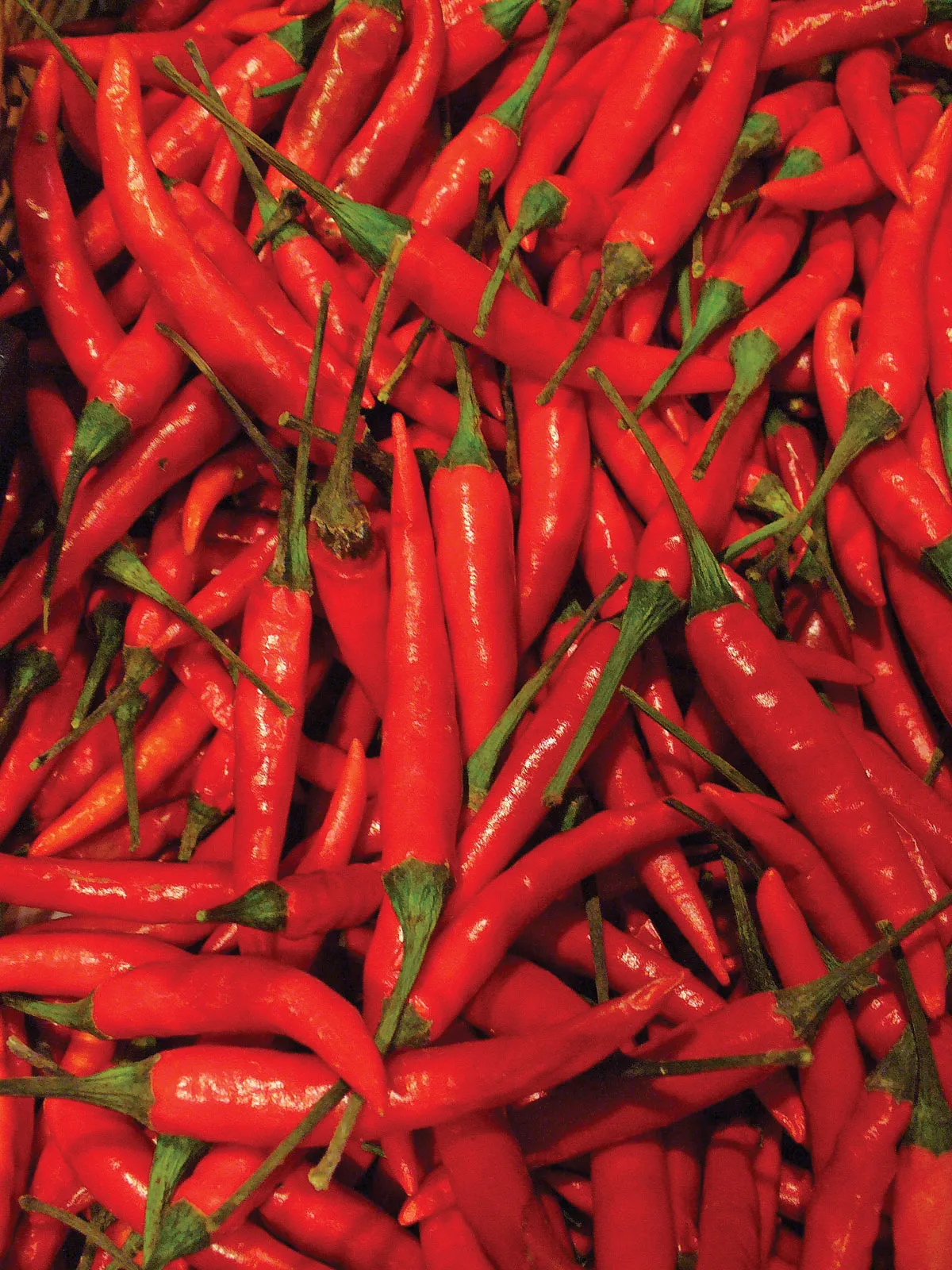
I wanted Tabasco and didn’t have any tabasco peppers, but I had a whole bowl of bird’s eye chillies going soft on the counter, so I used those. They’re hotter, and there’s something almost floral hiding under the heat. I tasted a bit of the raw mash off my finger and said “huh” out loud to nobody. Good sign, usually.
The fermenting is the part I keep coming back to. You salt the chillies, you wait, and the jar quietly does the rest. Tabasco apparently ages theirs in oak barrels for years, which is wild, and obviously not happening in my kitchen, so I give mine two or three weeks on the counter. Even that’s enough to get this sour, funky depth you just can’t get by pouring vinegar over raw peppers. I threw in some oregano leaves halfway through without really thinking about it. Couldn’t tell you why, but the next morning the jar smelled green and warm under all the heat, and that settled it. Haven’t made it without since.
Makes roughly one 250 ml bottle.
Ingredients
For the ferment
- 200 g bird’s eye chillies (red ripe ones if you can get them, for more colour and a little more sweetness)
- 1 to 2 cloves garlic (optional but I’d encourage it)
- a small handful of fresh oregano leaves, picked off the stems
- 20 g non-iodised salt (about 2 tbsp), which works out to roughly 2.5 to 3% of your total weight
- filtered or boiled-and-cooled water, enough to cover
To finish
- 80 to 120 ml white vinegar (distilled or apple cider both work)
- salt, to taste
Method
Prep the chillies. Pull the stems off and give everything a rinse. Leave the seeds in if you like. They add almost no heat, whatever you’ve heard. The real fire lives in the pale pith clinging to the inside walls. Roughly chop the chillies, garlic and oregano. Wear gloves. I learned this the hard way and I am passing the lesson to you free of charge, and whatever you do, do not touch your eyes.
Salt and pack. Blitz the chillies, garlic and oregano into a coarse mash, or chop them fine by hand if you’d rather not clean the blender. Weigh the lot, then work in 2.5 to 3% of that weight in salt. Pack it into a clean jar, pressing down with a spoon until the liquid rises over the top. The colour at this point is a really deep red. I always stop and look at it for a second.
Keep it under the brine. This is the one rule that genuinely matters. Anything poking up above the liquid will find a way to grow mould. Hold it down with a fermentation weight, a small ziplock bag of brine, or a cabbage leaf tucked over the surface. Cover the jar loosely. It needs room to breathe and let its gases out, not to be sealed shut.
Ferment. Set it somewhere out of direct sun at ordinary room temperature, around 18 to 24 °C. Within a day or two you’ll notice small bubbles rising through the mash. That’s the good bacteria getting going, and I still find it weirdly exciting. Burp the jar daily if it’s sealed. Give it 1 to 3 weeks. Taste as you go. It’s ready when the smell turns pleasantly sour and funky rather than just hot, the moment it stops smelling like chillies and starts smelling like sauce.
Blend. Tip the whole lot, mash and brine together, into a blender. Add the vinegar and run it until smooth. The vinegar drops the pH and that is what makes the sauce shelf-stable, which is the entire idea behind Louisiana-style.
Strain (optional). Push it through a sieve for a thin, pourable, true-Tabasco texture. Leave it as is for the thicker, diner-bottle kind. I tend to land somewhere in the middle, partly out of laziness and partly because I’ve come to like a sauce with a little body to it.
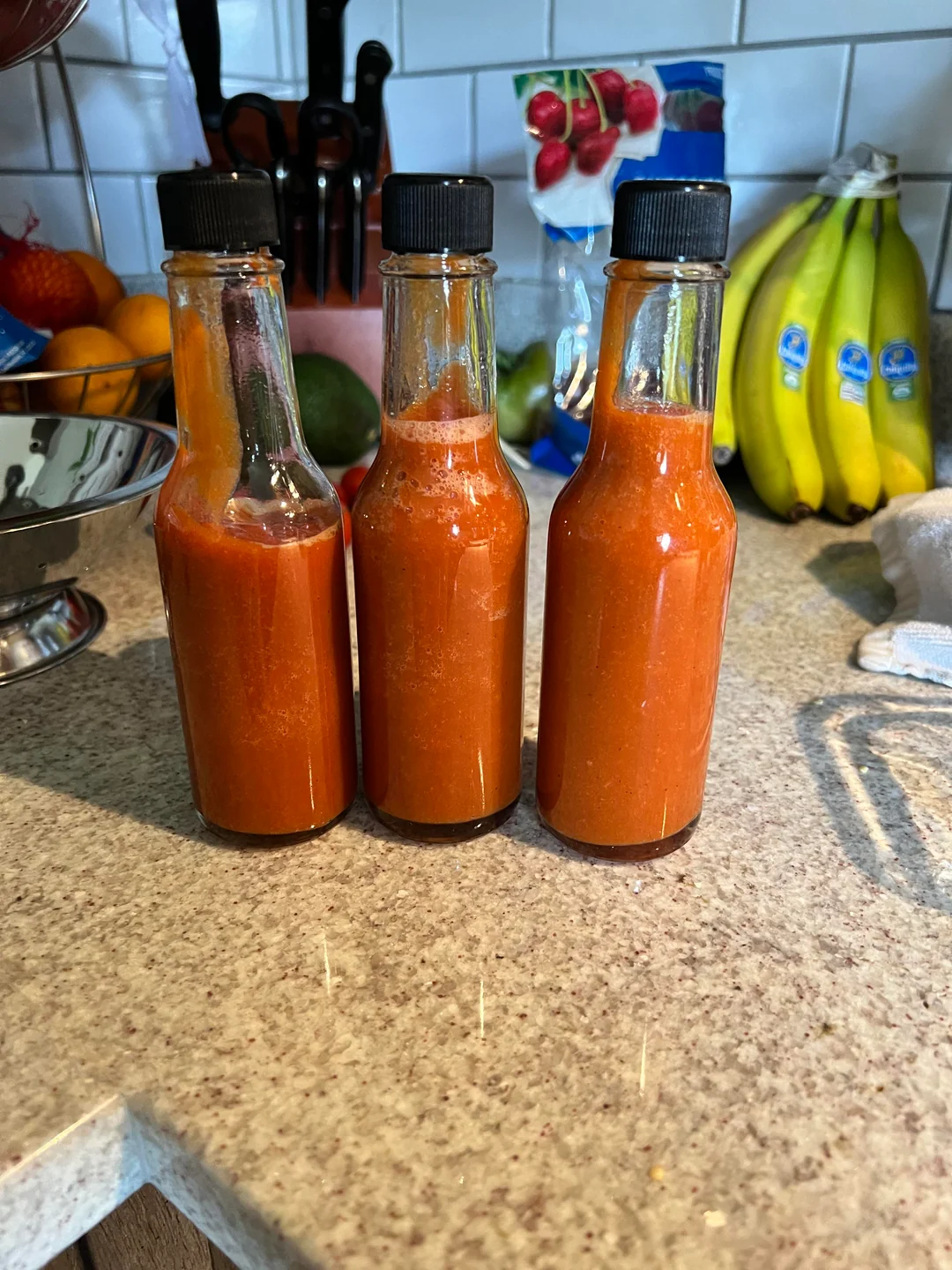
Bottle and rest. Funnel it into a clean bottle. It’s good the moment it’s made, but give it a few days in the fridge and it rounds out, the sharp edges settling into something fuller. Worth waiting for.
Notes
- A flat white film on top of the ferment is almost always kahm yeast. It’s harmless. Skim it off and carry on. Fuzzy, coloured, or hairy growth is mould, and that one means start over, no negotiating.
- If the sauce separates in the bottle, don’t worry. That’s the sign of a real one. Give it a shake.
- If the heat comes on too strong, cut the bird’s eyes with some milder red chillies next time, or stir a little honey into the finished sauce. It doesn’t read as sweet so much as it takes the sharp top off the burn.
- Properly fermented and acidified, this keeps in the fridge for months. The vinegar is doing the preserving, so don’t be shy with it.
Bonus: Buffalo Wing Sauce
Between you and me, this is the real reason I make a double batch of hot sauce. Buffalo sauce is hot sauce and butter and almost nothing else, and I am still slightly amazed every time at how much that adds up to. The fermented funk has somewhere to go here, and it goes there beautifully.
- 120 ml of the hot sauce above
- 60 g unsalted butter
- 1 tbsp honey or a pinch of sugar (optional, balances the tang)
- 1/2 tsp garlic powder
- a splash of Worcestershire sauce
Melt the butter in a small pan over low heat, then whisk in the hot sauce, honey, garlic powder and Worcestershire. Keep the heat low and patient. You want it to come together into a glossy, faintly thick sauce, not boil and split. Toss it through hot, crisp wings right before serving so they stay properly saucy. Roasted cauliflower works too, and I won’t think less of you for it. Blue cheese dip and cold celery on the side are, as far as I’m concerned, not optional.